
Achieving Coherence
All of Wordswell’s efforts are guided by an evolving conceptual framework — a small set of connected ideas that explain how we understand the world and how our work contributes to its betterment. A conceptual framework offers a shared language for thinking, learning, and acting together, and it grows over time as experience deepens our understanding. Below are the core elements of this framework at present.

Age of Transition
Humanity is passing through an age of transition not unlike the turbulent passage from childhood to adolescence in the life of an individual.
Around the world, long‑standing social structures and institutions, along with the norms and inherited assumptions that have guided collective life, are being outgrown as they prove unable to meet the needs of an increasingly interconnected global society and a humanity whose intellectual, moral, and social capacities are steadily rising. The resulting strains are visible in social fragmentation, widening inequality, the erosion of trust, and a growing sense of disorientation. At the same time, new patterns of cooperation and reciprocity are emerging, and more coherent forms of social organization are taking shape—expressions of a broader movement toward unity and a global civilization that embodies the oneness of humanity and the principle of justice. Taken together, these constructive and destructive forces signal humanity’s gradual movement toward a more unified and just stage of collective life, one in which the material and spiritual dimensions of civilization advance in harmony.
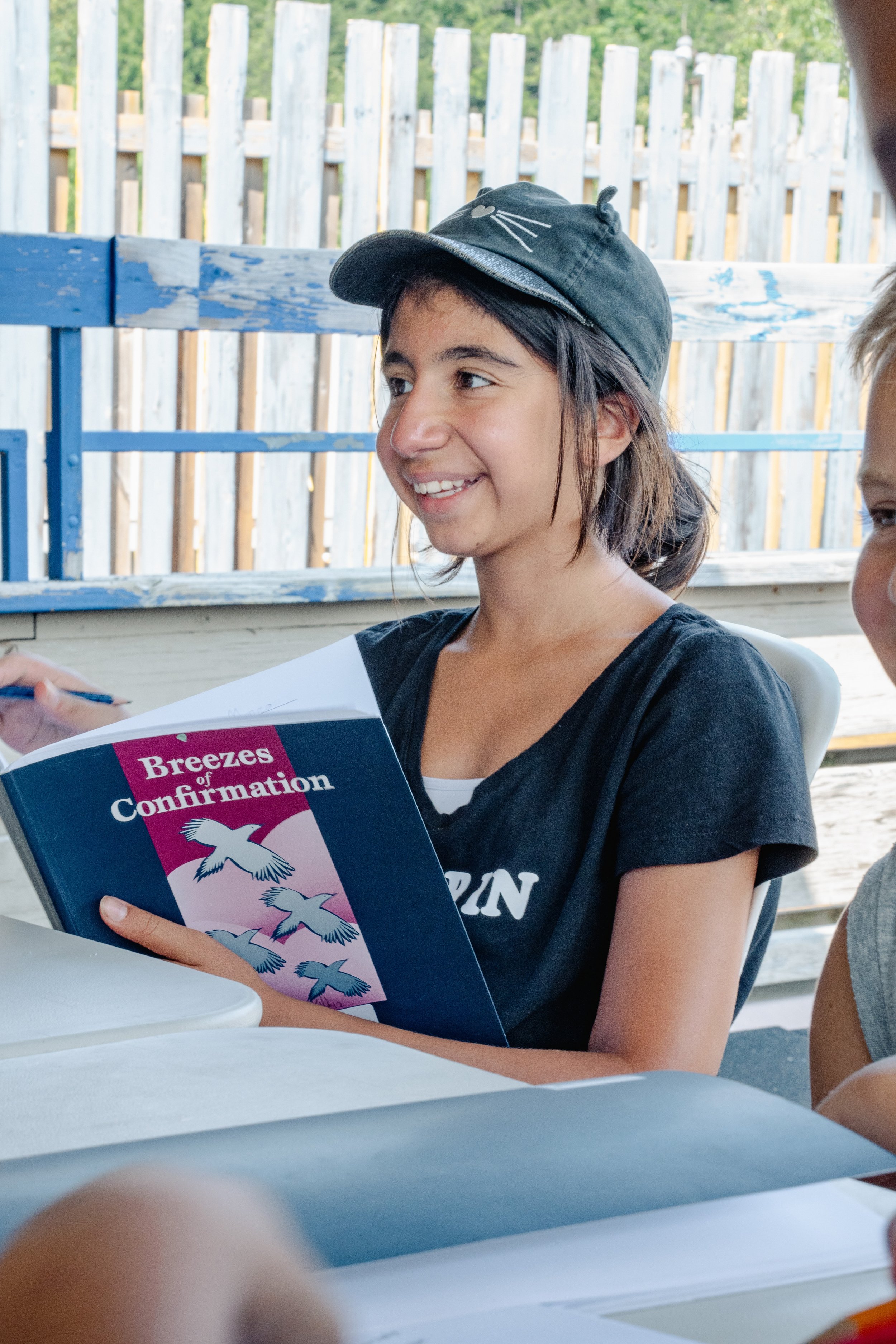
The impact of these parallel processes is felt acutely by young people. They are growing up at a time when long‑standing social and institutional patterns are breaking down even as new ones emerge, and this dual movement shapes their questions, uncertainties, and aspirations. Yet youth possess a distinctive receptivity to maturing ideals of oneness, justice, and purposeful contribution. Wordswell’s research and educational initiatives are situated within this broader context, focusing on how young people, their families, and their communities can participate in the constructive processes that advance both material and spiritual civilization. By cultivating coherence in the lives of youth and strengthening their capacity to contribute meaningfully to community life, Wordswell supports the emergence of patterns of thought and action that reflect the early signs of humanity’s collective maturity.

Coherence
For a civilization to advance in a healthy and sustainable way, the material and spiritual dimensions of life must be approached coherently.
False dichotomies—such as between faith and reason, theory and practice, autonomy and dependence, the individual and the collective—must give way to an understanding of their complementarity and interconnectedness. A fragmented view of education, work, family, and service to the community can no longer suffice. Those in their formative years, in particular, need accompaniment in shaping lives that are whole and integrated. This requires families and communities to help create an environment in which young people learn to resist the consequences of disintegration, to distinguish truth from propaganda, and to avoid the constant pull of distraction so they can gain the clarity needed to make wise decisions about their future.
The emergence of such an environment depends on the gradual adoption of a shared language of coherent transformation—a language that gives renewed meaning to concepts such as motivation, talent, excellence, service, participation, success, progress, wealth, prosperity, means and ends, justice, and oppression. Wordswell’s research and educational efforts are directed toward strengthening this capacity for coherence in the lives of young people and supporting families and communities as they learn to cultivate such an environment together.

Empowerment
As humanity learns to navigate this age of transition, the question of how individuals, and especially young people, develop the inner capacities needed to contribute to a more just and unified civilization becomes increasingly important.
Moral empowerment speaks to this need. It refers not to the power to dominate, persuade, or impose one’s will, but to the powers of the human spirit: the capacity to act with integrity, to translate noble intentions into reality, and to serve the wellbeing of others with humility and purpose. The empowerment of individuals and groups at the grassroots of society is a historical imperative in a world where old patterns are losing coherence and new ones are taking shape.
At the heart of moral empowerment is the cultivation of a twofold moral purpose. The first is the responsibility each person bears for developing the qualities, attitudes, habits of mind, and capacities required of a member of a human race advancing toward a new stage of collective maturity. The second is the work of directing those capacities toward the common good, contributing to the material and spiritual wellbeing of all people. These two dimensions of moral purpose are inseparable and mutually reinforcing; together they define what it means to live a coherent and purposeful life in this age.

Youth
Young people stand at the forefront of humanity’s movement through this age of transition. They are inheriting a world marked by rapid technological change, social fragmentation, and profound uncertainty, yet also by unprecedented possibilities for cooperation, learning, and collective advancement.
Their aspirations, questions, and capacities will shape the character of the emerging civilization. To navigate this moment, youth need more than technical skills or personal drive; they require environments that nurture clarity of purpose, moral insight, and the ability to contribute meaningfully to the wellbeing of their communities.
The period of youth is a formative stage in which identity, worldview, and patterns of action take shape. It is a time when the desire to understand the world and to participate in its transformation is especially strong. Many young people find themselves caught between competing messages, conflicting expectations, and social forces that pull toward distraction, cynicism, or disengagement. Supporting youth is not simply a matter of providing services or opportunities It necessarily involves helping them to develop the capacities that enable them to read their reality with discernment and to act with coherence and purpose. Wordswell’s work is grounded in this understanding. It seeks to accompany young people as they learn to think critically, to engage in meaningful inquiry, to work collaboratively with others, and to translate their insights into constructive action.

Knowledge
As humanity learns to navigate this age of transition, the question of how individuals, and especially young people, develop the inner capacities needed to contribute to a more just and unified civilization becomes increasingly important.
Moral empowerment speaks to this need. It refers not to the power to dominate, persuade, or impose one’s will, but to the powers of the human spirit: the capacity to act with integrity, to translate noble intentions into reality, and to serve the wellbeing of others with humility and purpose. The empowerment of individuals and groups at the grassroots of society is a historical imperative in a world where old patterns are losing coherence and new ones are taking shape.
At the heart of moral empowerment is the cultivation of a twofold moral purpose. The first is the responsibility each person bears for developing the qualities, attitudes, habits of mind, and capacities required of a member of a human race advancing toward a new stage of collective maturity. The second is the work of directing those capacities toward the common good, contributing to the material and spiritual wellbeing of all people. These two dimensions of moral purpose are inseparable and mutually reinforcing; together they define what it means to live a coherent and purposeful life in this age.