
Research
Wordswell’s research seeks to understand how young people develop coherent lives in which their intellectual, moral, and material capacities advance together. Through participatory action research, these efforts illuminate the conditions that shape youth development and the capacities needed to contribute to the wellbeing of their communities.
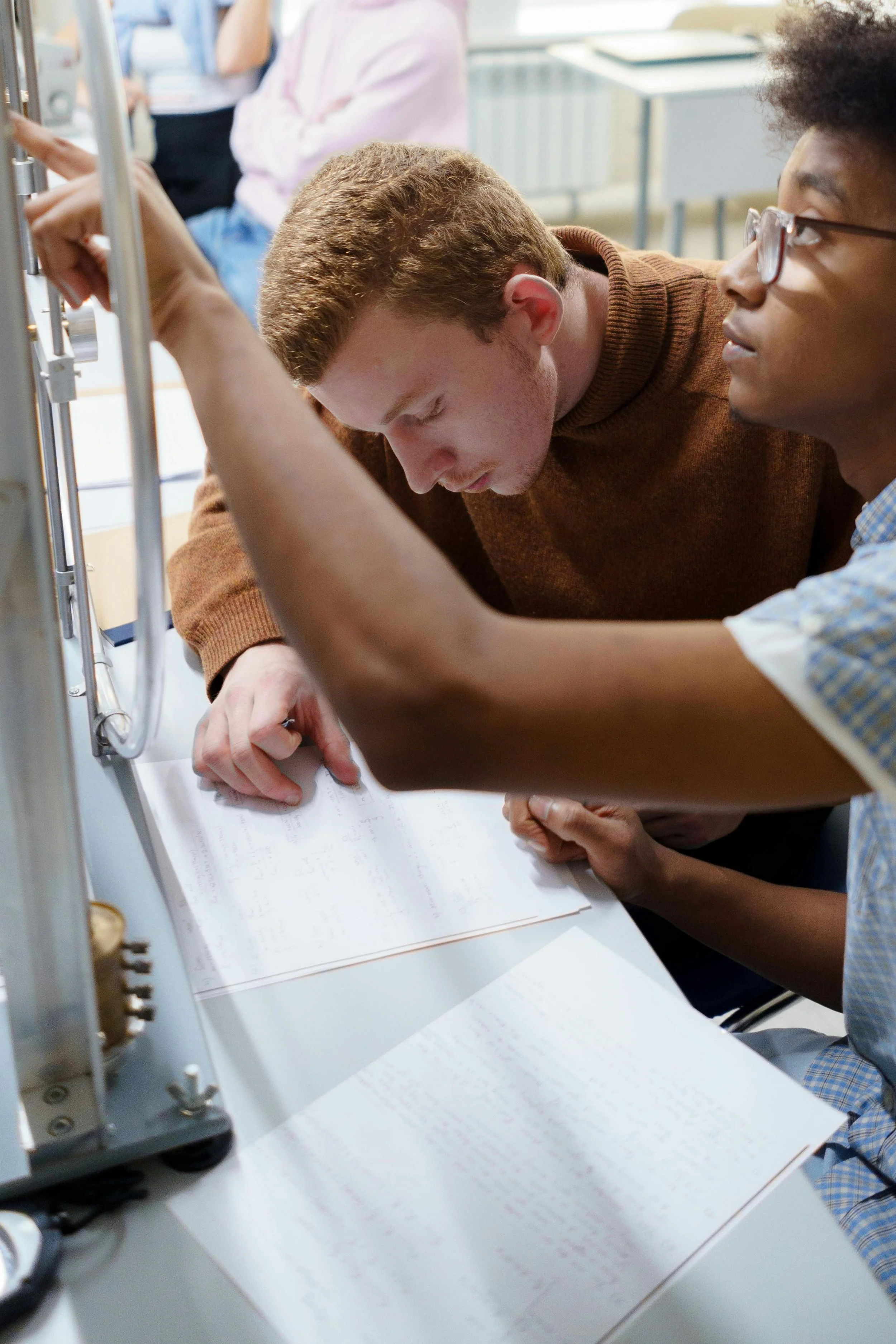
Areas of Focus
At present, our research focuses on several interconnected areas
Mathematics and
Language Education
1
Exploring how young people develop strong intellectual foundations and the habits of disciplined, joyful learning.
Media and Film
2
Understanding how young people interpret and contribute to their media environments, and how storytelling shapes identity and community life.
Tertiary and Vocational Education
3
Examining the pathways through which youth navigate higher education, work, and service, in a mode of disciplined, joyful learning.
Health and Nutrition
4
Studying the social and environmental factors that influence the wellbeing of youth and their families.
We offer opportunities for master’s and doctoral students to engage directly with the Wordswell’s ongoing lines of research.
Graduate researchers work alongside youth, families, and educators to investigate questions related to learning, coherence, and community life. Depending on their academic background and research interests, students may contribute to qualitative or mixed‑methods studies, analyze emerging patterns from Wordswell’s educational initiatives, or support the development of new conceptual and pedagogical materials.
Many graduate students also participate in field‑based activities—such as tutoring, family visits, or accompaniment of younger interns—which provide a practical context for examining the relationship between theory and lived experience. These collaborations allow students to advance their own scholarly work while contributing to Wordswell’s evolving understanding of how young people can build coherent lives of service within their communities.
Papers and Theses
Farahmandpour, H. (2024). Resisting common-sense notions of employability, risk, and race: A multi-case study of reimagined approaches to youth employment training in Toronto (Doctoral dissertation, University of Toronto)
Arjomand, S. (in progress). A community approach to math education involving peer mentorship for middle school students (Unpublished doctoral dissertation). Queen’s University, Faculty of Education.
Maloney, E. (2020). Telling stories in order to live: An inquiry into applied theatre and critical media education in an urban middle school (Master’s thesis, University of Toronto).
Shodjaee‑Zrudlo, I., & Farahmandpour, H. (2017). The decisive contribution of youth to community well-being. In Handbook of Community Well-Being Research (pp. 505–521). Springer
Sadeghi, A. S. (2022). Fostering intellectual capacity after school: Implications for enhancing youth engagement with school (Unpublished undergraduate capstone paper). Department of Sociology, York University.
Puvanesan, K. (2026). Threads of growth (Unpublished undergraduate environmental design thesis). Faculty of Design, OCAD University.